
The Crow’s Contrasting Fortunes
Aesop's FablesThis thread follows Crow characters as they alternate between vanity, deception, mistaken judgment, and resourcefulness.
increasing Bearing strength in each event
 decreasing
Bearing strength in each eventdecreasingThe Crow Loses Its Meat
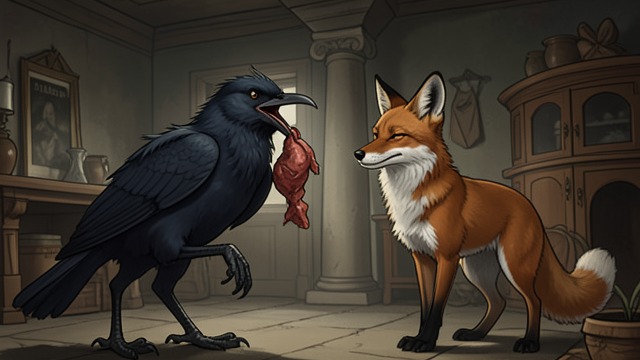
Flattery as a Trap
The Fox’s Praise
A Crow holds stolen meat in a tree while a Fox praises its appearance and suggests its voice should match its beauty. The compliment is designed to provoke a display.
The Dropped Prize
The Crow caws and drops the meat; the Fox takes it. The encounter makes vanity an opening through which another character can seize what the Crow already possessed.
The Crow Seeks the Raven’s Status
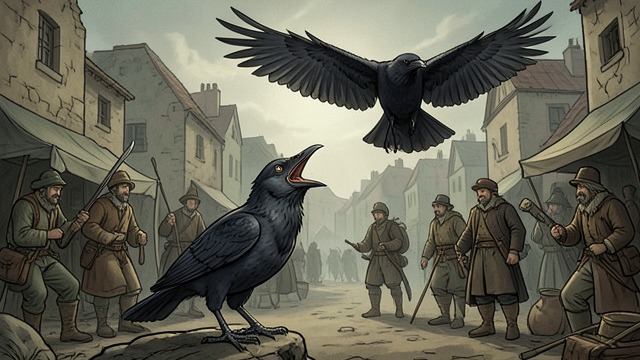
Imitating an Omen
A Rival’s Reputation
A Crow envies the attention paid to a Raven whose flight is treated as an omen. It imitates that importance by perching near travelers and cawing loudly.
A Dismissed Cry
A traveler identifies the sound as merely a Crow’s caw. The attempt to borrow another bird’s standing only makes the Crow appear ridiculous.
The Crow Tries to Drink
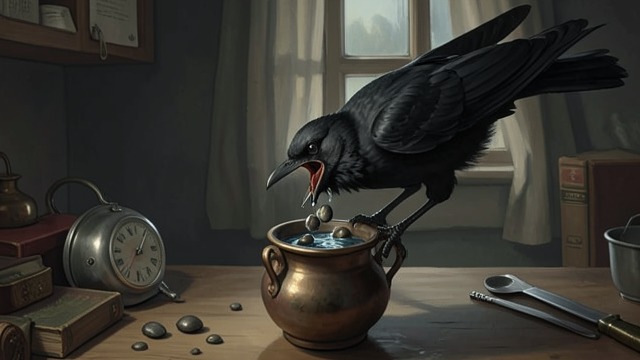
Persistence at the Pitcher
A Thirsty Discovery
A Crow finds a pitcher with too little water to reach. Initial attempts cannot bridge the distance between its beak and the surface.
Stones Change the Level
The Crow collects pebbles and drops them into the vessel until the water rises. Its success comes not from imitation or praise but from adjusting the conditions of the problem.
The Crow Breaks Its Promise
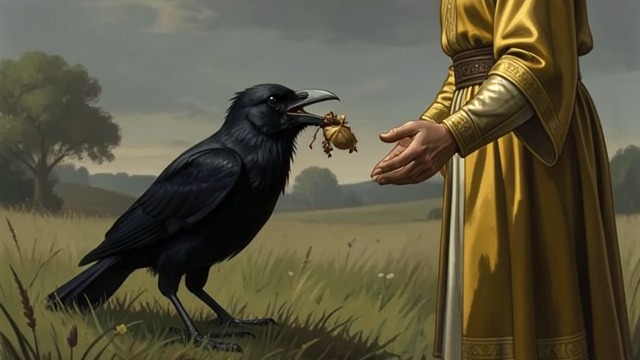
An Escape Followed by Forgetfulness
The First Vow
Caught in a snare, a Crow promises Apollo an offering in return for rescue. Once released, it forgets the vow and keeps what it promised.
A Second Appeal
Caught again, it makes the same bargain to Mercury. Mercury challenges its reliability by recalling the broken promise to its previous patron.
The Crow’s Windfall Turns Fatal
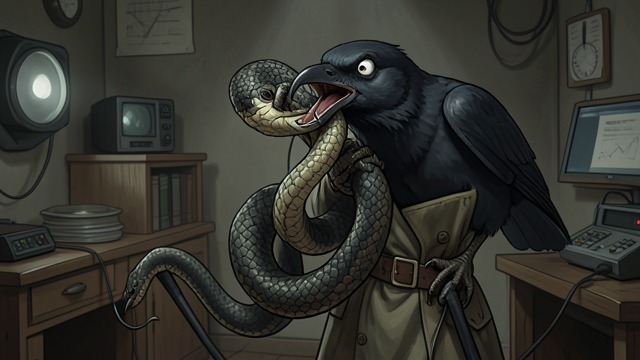
Appetite Without Caution
A Sleeping Snake
A hungry Crow sees a Snake asleep in a sunny place and seizes it, treating the discovery as an easy meal.
The Fatal Bite
The Snake turns and wounds the Crow mortally. The bird recognizes too late that what seemed like a fortunate opportunity was the source of its destruction.
In an early fable
In the middle of the collection
In a later practical fable
Late in the collection
Among the final fables
